Suit of Swords · 5 of Swords
Five of Swords Tarot Card Meaning
- Upright
- hollow victoryconflictwinning at a costself-interestbad blood
- Reversed
- making amendscutting lossesan old grudge releasedconflict fatigue
- Yes or No
- No
- Element
- Air
- Astrology
- Venus in Aquarius
What the card shows
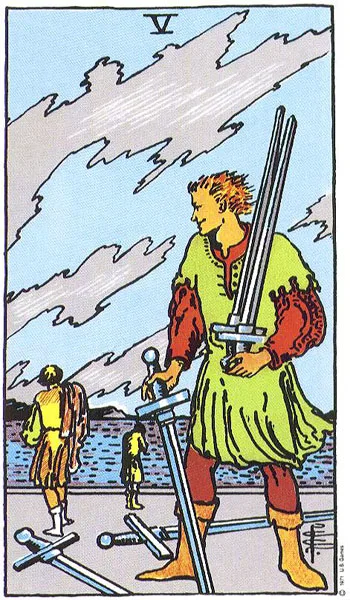
Under a sky of ragged, wind-torn clouds, a man gathers up swords near the shore, two on his shoulder, a third planted in the ground beside him. He looks back over his shoulder with an expression that sits somewhere between a smirk and appraisal. In the middle distance two other figures walk away toward the water, one with head in hands, both slumped, their weapons abandoned. The field belongs to the man with the swords. Whether it was worth holding is the question the card leaves open.
Five of Swords: upright meaning
Who actually won here? The Five of Swords shows a victory that empties the room, an argument taken to the last word, a point proven at the price of trust, a fight where being right became more important than being in relationship. You may be the figure collecting swords or one of the two walking away; the card reads both directions, and it is worth honestly asking which one you are. Its Venus in Aquarius signature is telling: warmth gone cold and theoretical, connection sacrificed to principle. Sometimes the counsel is to disengage, because this particular battle costs more than any outcome is worth. Sometimes it is a mirror: you won, and you should look at what the winning did. Either way, the field in this card is windy, littered, and lonely.
Five of Swords: reversed meaning
The appetite for the fight runs out, and that is usually progress. Reversed, this card marks apologies that finally get made, grudges set down because carrying them got too heavy, or the clean decision to cut losses and leave a battle that was never winnable. It can also show old conflict refusing to close, sniping that continues after the war officially ended. If someone offers a genuine olive branch, take it. If you owe one, offer it without a rider. The relief on the far side of a released grudge is larger than it looks from here.
Five of Swords: love & relationships
Upright
Arguments where winning has replaced understanding. Score-keeping, last words, the cold pleasure of a point well made against someone you love, this card names all of it, and names its cost. If a partner or interest habitually needs to defeat you in conversation, believe the pattern. Nobody wins a relationship.
Reversed
A ceasefire becomes possible. One of you softens, an apology arrives or becomes speakable, and the conflict that has been running your relationship starts to wind down. Alternatively, it marks finally walking away from a connection that ran on conflict. Choose repair or release, but stop re-fighting the same battle.
Five of Swords: career & money
Upright
Office politics with casualties: credit taken, colleagues undermined, a negotiation pushed so hard the relationship died with the deal. You may be winning by metrics and losing by reputation. Money made through someone else's loss carries a tail of consequences here. Check the cost column before celebrating.
Reversed
Workplace tension de-escalates, or you make the smart call to stop fighting for a position, project, or point that no longer merits the blood. Mending one professional fence, sincerely, often does more for your career this season than winning three more arguments would.
Five of Swords: yes or no?
No.
Take this one as a no. Even when the Five of Swords technically delivers what you asked for, it delivers it stripped of the satisfaction you wanted it for, a win that costs allies, trust, or peace. If your question is whether to enter or continue a conflict, the no is louder: this fight bills you either way.
Related cards
Frequently asked questions
Would this card find you today?
Pull this card in a live reading →